


The question we get more than any other, usually from customers in Canada and the northern United States, is whether a winter djellaba is actually warm enough. Here is the honest answer before anything else.
A winter djellaba is a warm layer, not a winter coat. Worn over a kaftan it will handle a cold morning, a walk to the mosque, an outdoor Eid prayer in fall or spring. It will not replace an insulated parka in a Toronto January. Anyone telling you otherwise is selling you something.
What it does better than a coat is cover the whole garment underneath, which a jacket stopping at the hip cannot do.
What actually makes a djellaba warm
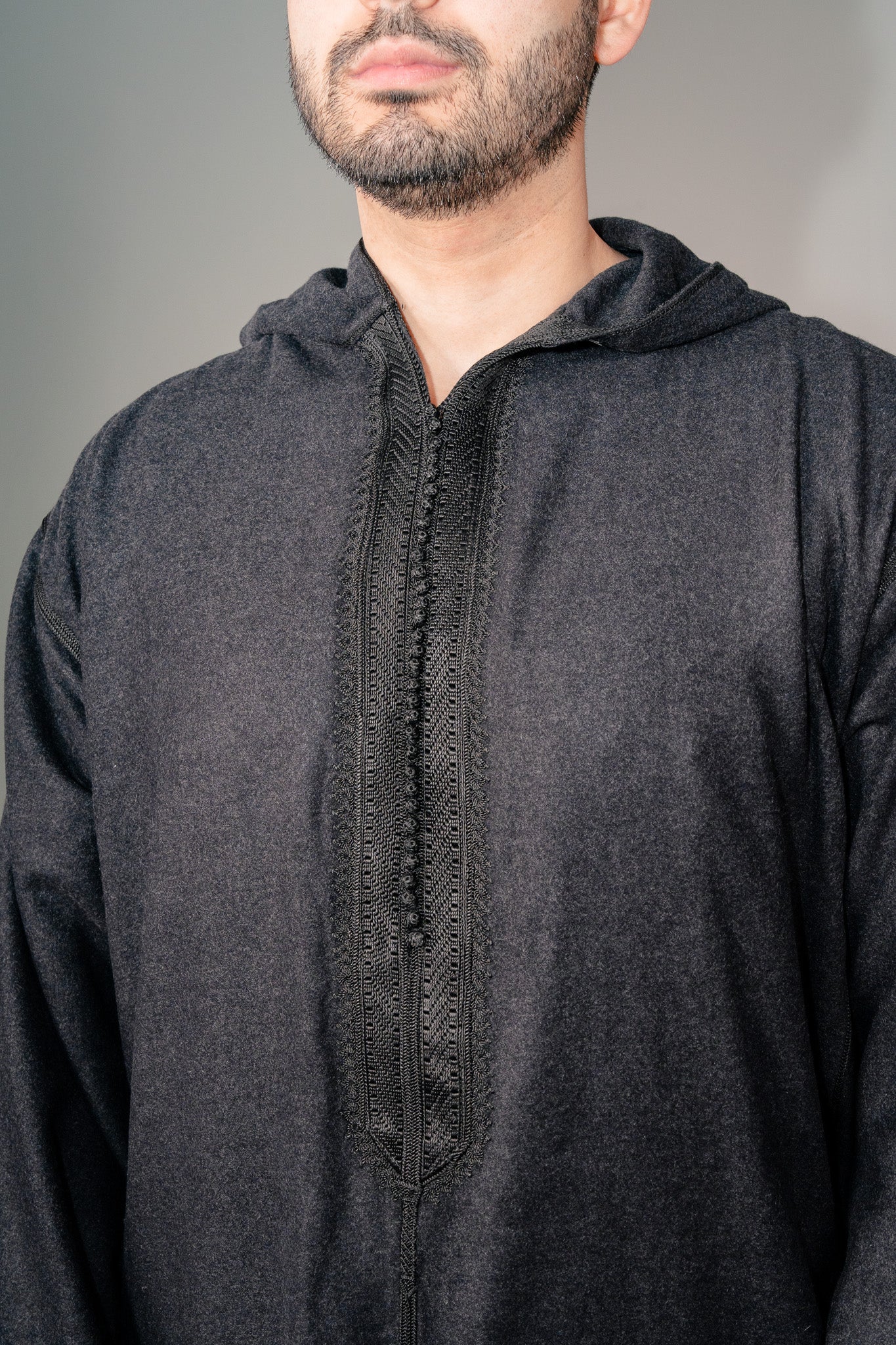
Three things, in order of how much they matter.
Fabric weight. This is most of it. A heavy weave traps air and blocks wind, and it keeps its shape as you walk instead of flapping open. Ours are cotton, polyester and viscose in a heavy weave. They are not wool, and we would rather say so than let you find out.
Cut and coverage. A djellaba is long and full, so it covers you from shoulder to ankle with no gap at the waist. That coverage does more for real world warmth than most people expect, because the cold usually gets in at the gaps.
The hood. A raised hood stops heat escaping from your head and neck, which is where you lose it fastest. It also means not carrying a hat.
What it does not have is lining or insulation. There is no fill, no fleece backing, no thermal layer. It is a single heavy layer, in the traditional construction.
How to layer it
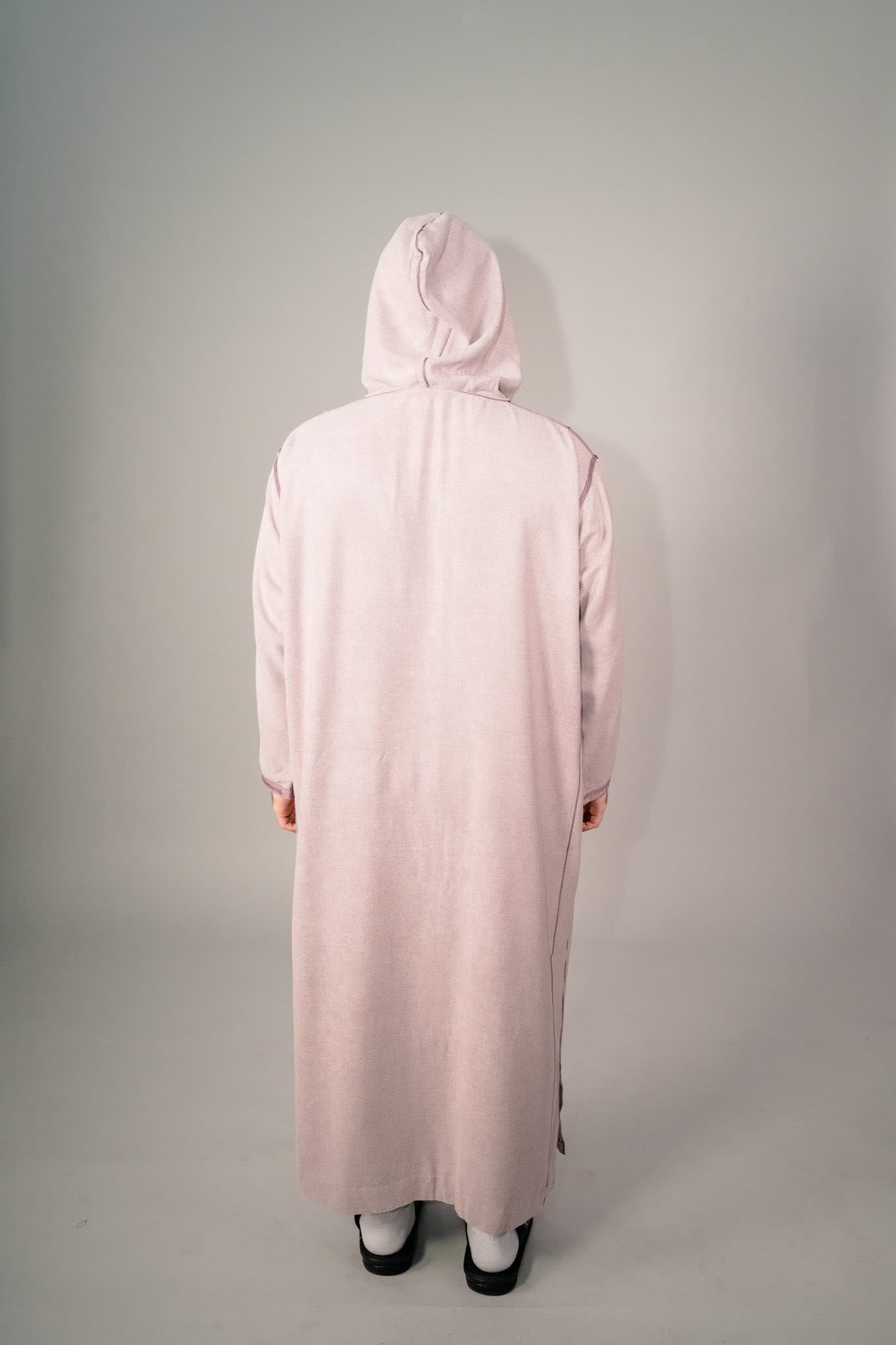
The djellaba is the outer layer. What goes under it is what decides how warm you are.
- Mild, around 10C or 50F. A gandoura underneath is enough.
- Cold, around 0C or 32F. A kaftan underneath, plus a thermal base layer. This is the combination most customers settle on.
- Below freezing. Add a thin insulated layer under the kaftan. At this point you are using the djellaba for coverage and appearance as much as for warmth, and that is a reasonable thing to do.
The two side slits matter here. They let you reach through to your trouser pockets, so you are not opening the outer layer to get your phone.
Sizing for winter
Size for what goes underneath, not for your body. This is the single most common sizing mistake with a djellaba.
A djellaba worn over a kaftan needs room through the chest and shoulders that the same size would not need worn alone. If you are between sizes, or if you plan to layer a thermal underneath, take the larger one. The cut is full anyway, so a size up reads as traditional rather than oversized.
Length should reach the ankle bone. Ours run S to 2XL and include an M/L for anyone caught between the two, which is more useful than it sounds. Measurements and height ranges are on the size guide.
Which color
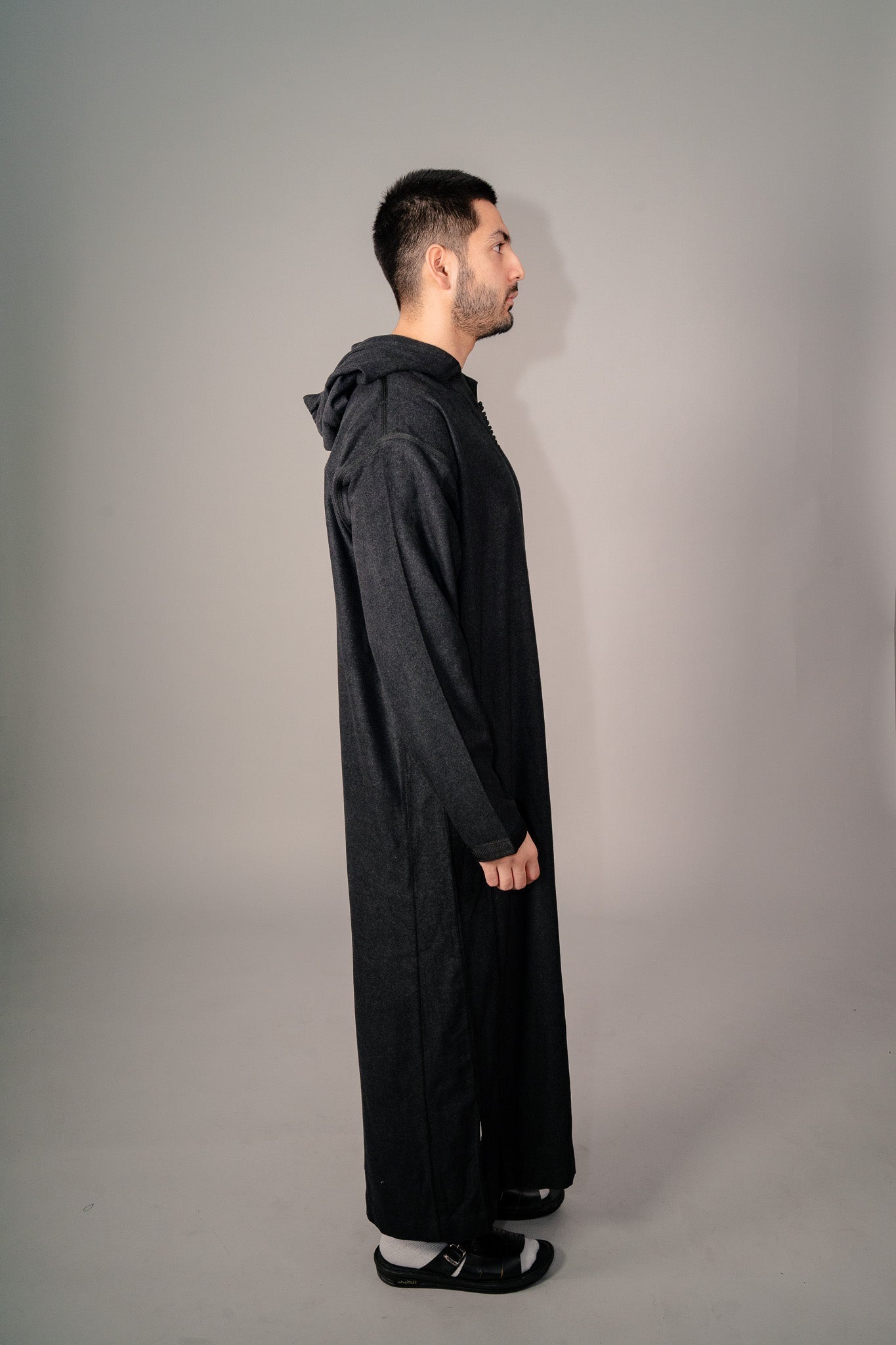
Practical advice rather than taste. Winter means wet ground and salt, and a djellaba hangs to the ankle, so the hem takes the worst of it.
Black or brown hide that best and go with whatever is underneath. Our black winter djelleba is the one most people buy first, and our brown winter djelleba is the easiest color to wear in a garment this size.
Lighter shades like the lavender winter djelleba look better in photographs and worse after a wet walk. Worth it as a second one, less so as your only one.
Caring for it
Dry clean only. Do not squeeze or twist, which breaks the weave and leaves the garment hanging badly for good. Hang it rather than folding it, because a heavy robe folded away holds a crease for weeks.
Lighter shades may arrive with washable tailor marks. They come out in the first wash.
Is it worth it?
If you already own a kaftan or a gandoura and you live somewhere with a real winter, yes. It solves a problem nothing else solves, which is staying warm without putting a coat over a robe.
If it would be your first Moroccan garment, start with a gandoura instead. A djellaba assumes you have something to wear underneath.
Browse the winter djelleba collection, $119.99.