


A kaftan is a long, loose robe with sleeves, worn across North Africa, the Middle East and parts of Asia. It reaches the ankle, it is cut to hang rather than cling, and in most traditions it carries some form of embroidery down the front.
You will see it spelled both kaftan and caftan. Both are correct. Kaftan is more common in Britain and North Africa, caftan more common in American writing, and the garment is identical either way.
Where the kaftan comes from
The word reaches us through Persian and Turkish, and the garment itself is old enough that no single country can claim to have invented it. Versions of it appear across the Ottoman Empire, Persia, West Africa and North Africa, each with its own cut, fabric and rules about who wore what.
What matters practically is that a kaftan is a regional family, not one design. A Turkish Ottoman kaftan, a West African boubou and a Moroccan kaftan are all kaftans, and they look almost nothing alike.
What makes a Moroccan kaftan different
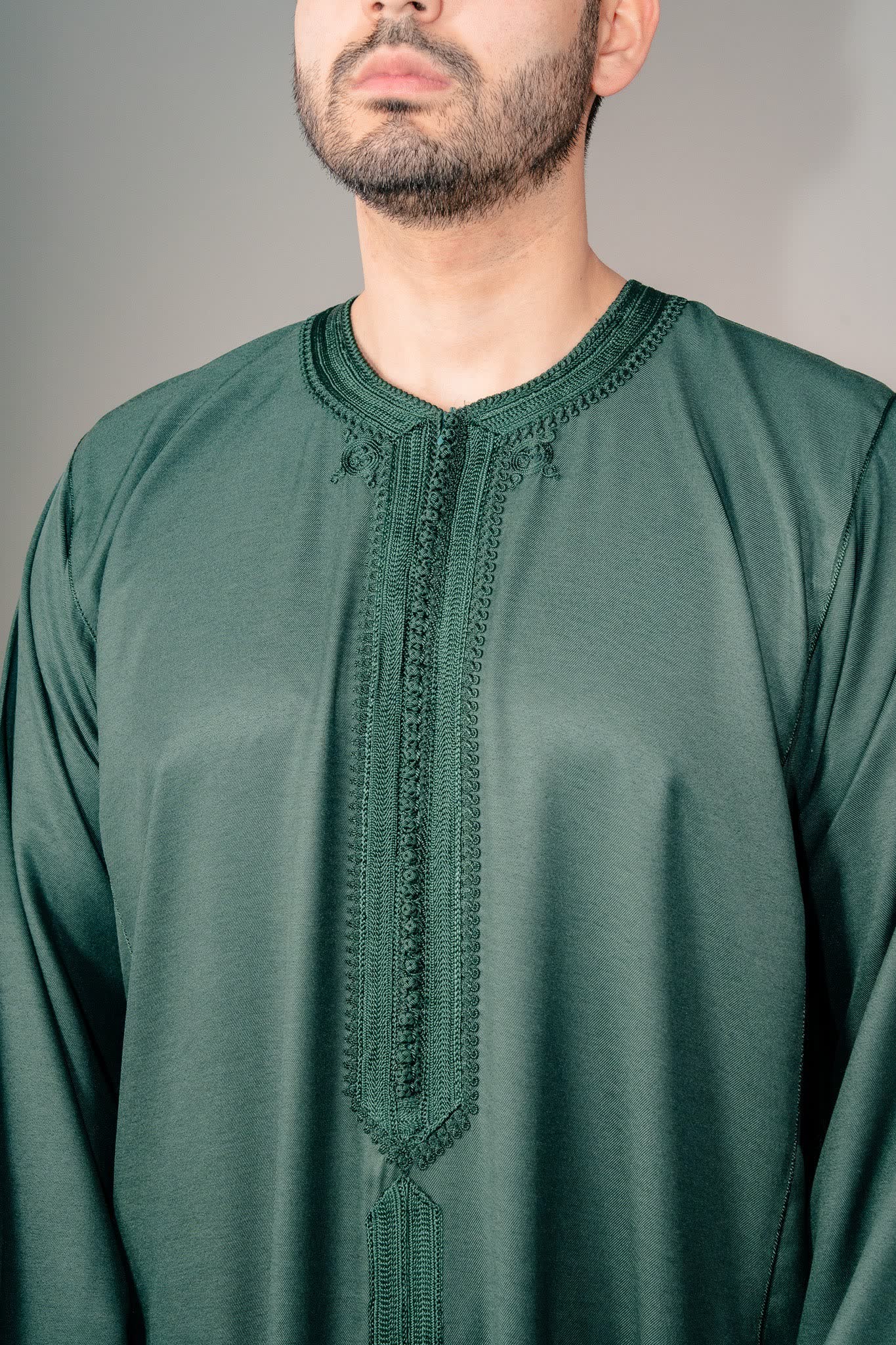
The Moroccan kaftan for men has a specific set of features, and once you know them you can identify one in a photograph:
- A mandarin collar. It stands upright and does not fold down. This is the clearest single tell.
- An embroidered placket running from the collar down the center of the chest. The embroidery is the decoration. There is rarely anything else.
- A concealed zip at the neck in modern versions, so the embroidered line is not broken by visible buttons.
- Long sleeves, finished with embroidery at the cuff.
- A straighter, cleaner line than Gulf styles, and a closer cut through the shoulders than a Moroccan gandoura.
A note on terminology that confuses a lot of shoppers. In Morocco, the word kaftan on its own often refers to a woman's garment, and the men's version may be called a jabador or simply a thobe depending on who is speaking. Outside Morocco, men's kaftan is the term people search for and use. We use it that way here.
Casual and occasion kaftans
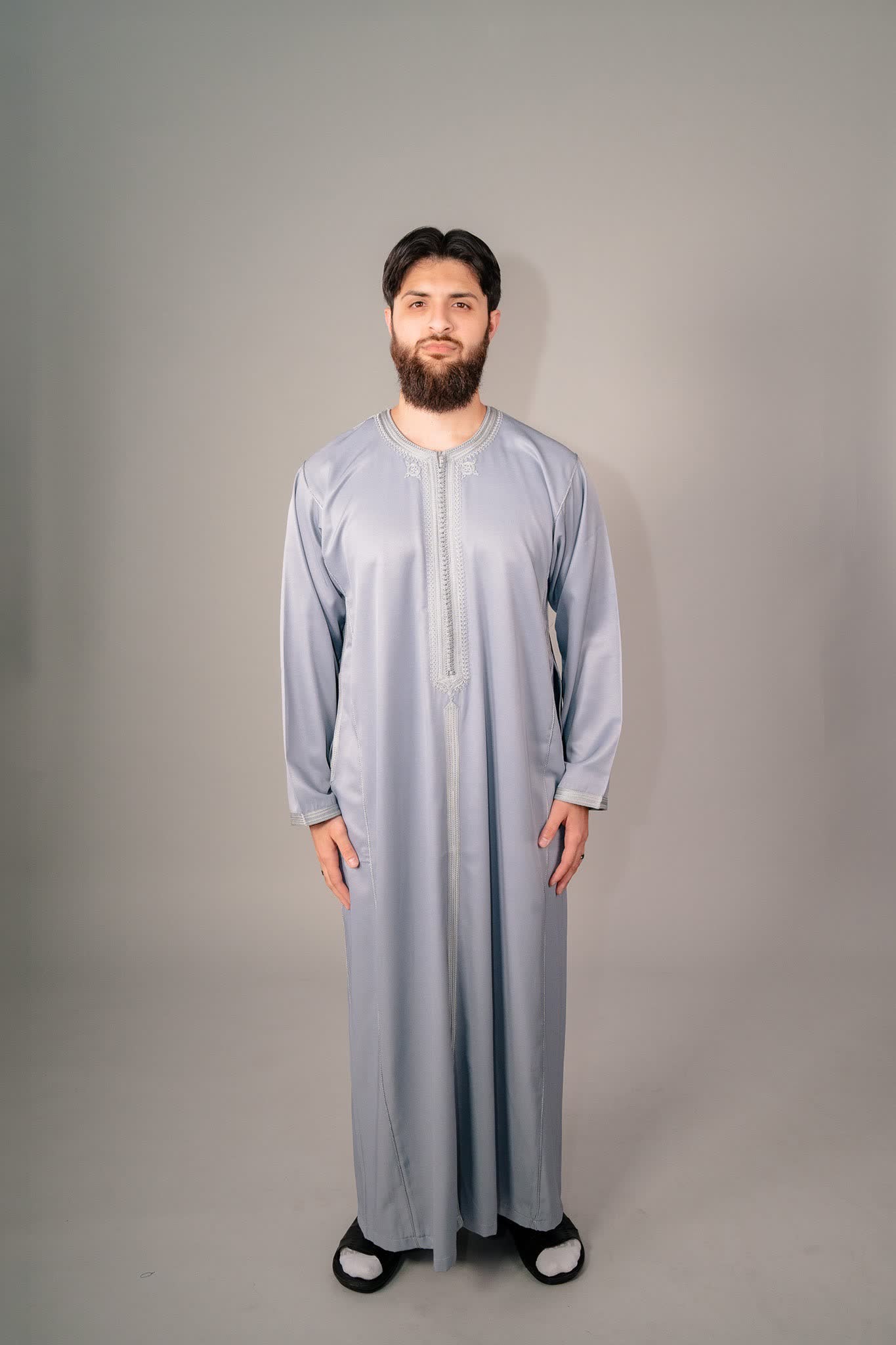
The split is mostly about color and how much embroidery is on the chest.
Everyday. Black, gray, brown, deep blue. Minimal tonal embroidery, meaning the thread is close to the fabric color so the detail only shows up close. These read as plain from across a room, which is what makes them wearable on a normal Friday. Our gray Moroccan kaftan is the clearest example.
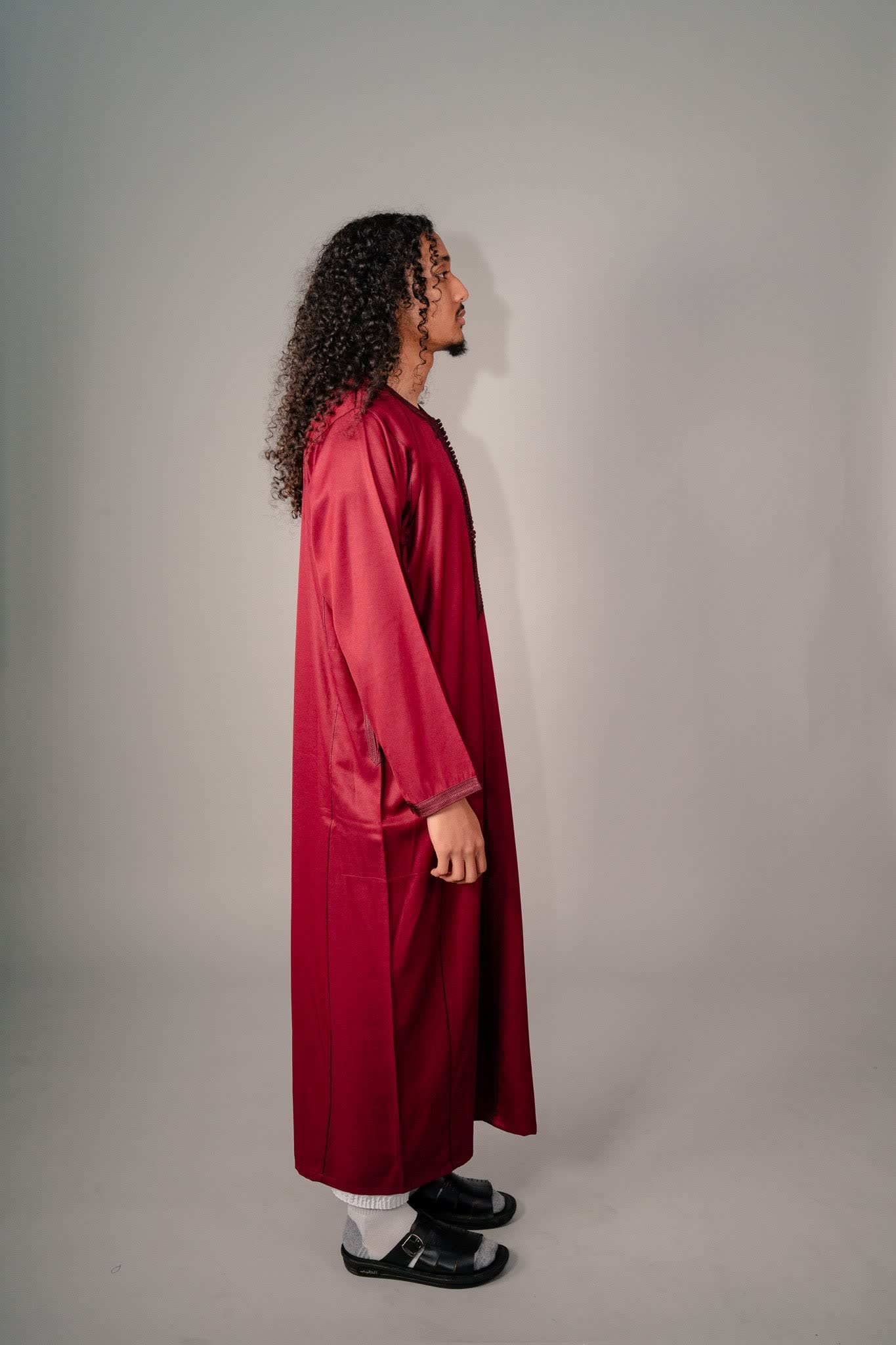
Occasion. Emerald green, burgundy, indigo, royal blue, with contrasting embroidery that catches light. These are built for Eid, weddings and evening gatherings. Our emerald green Moroccan kaftan and burgundy Moroccan kaftan sit in this group.
There is no structural difference between the two. Same cut, same fabric, same pockets. Only the color and the thread change.
How to wear a kaftan
Underneath. A plain cotton undershirt and loose trousers. Avoid anything with a visible collar, which fights the mandarin collar, and avoid anything bulky through the shoulder.
Footwear. Leather sandals or babouche slippers are traditional. Plain leather shoes work and look deliberate. Trainers undercut the whole garment, and the hem draws the eye straight to them.
Headwear. A kufi or taqiyah, optional, and worn for prayer rather than as styling.
Layering. In cold weather, a winter djelleba over the top. A coat over a kaftan never looks right, because the coat stops at the hip and the robe carries on.
Picking the right size
A kaftan should skim, not hug. The shoulder seam wants to sit where your shoulder ends, the hem at the ankle bone, and the sleeve at the wrist.
The most common mistake is sizing up for length, which also widens the shoulders and body and leaves the whole thing hanging off you. Use the height ranges on the size guide instead. If you are genuinely between sizes, take the larger one, because a garment cut this way cannot be let out.
We cover this properly in how a Moroccan kaftan should fit.
Caring for it
Hand wash or dry clean only. Do not squeeze or twist, which breaks the weave and leaves the garment hanging badly afterwards. Hang to dry rather than folding it wet. Lighter shades sometimes arrive with washable tailor marks, which come out in the first wash and are not a defect.
Browse our Moroccan kaftan collection, twelve colors, sizes M to 3XL.